
What to Include in Product Security Testing
What is included in a Product Security Test, often referred to as "the scope", greatly depends on the product’s features and the customer’s specific security objectives. Each test is tailored to the technology stack, threat landscape, and operational context of the product, ensuring relevant and high-impact coverage.
During our planning with the customer and what we discover as penetration testers, we might find the testing to include a variety of elements, all which our team can assess. These layers are on hardware, infrastructure, software and network, as the picture below shows:
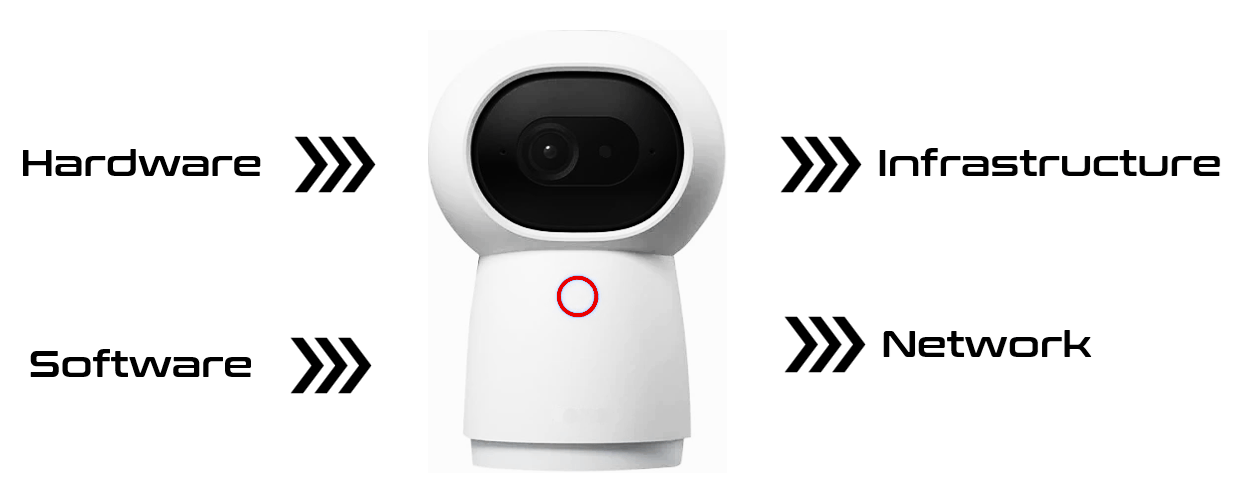
The Layers
Digging deeper into the layers, we see evidence of deeper layers, which our team can help assess. Read more about them in the grouping below.
Our hardware testing focuses on uncovering weaknesses across critical physical components. This includes chips and system-on-chips (SoC), memory such as DRAM and SRAM, storage types like ROM, EEPROM, Flash, and eMMC, as well as internal buses and SPI interfaces. Each of these layers exposes unique attack surfaces, and our specialized testing ensures they are thoroughly evaluated for security before your product reaches the field.

The Full Stack Penetration Tester
Product Security Testing, sometimes referred to as Device or Hardware Security Testing, is a specialized area within penetration testing. It requires a skilled team to assess a broad range of technologies, attack surfaces, and potential threat scenarios, ensuring that products are evaluated against both known vulnerabilities and complex, real-world attack paths across hardware and software layers.
Instead of relying on a single individual to conduct penetration testing, River Security’s methodology is built around structured collaboration. Our approach enables fine-grained prioritization and efficient distribution of tasks across a skilled team, ensuring deeper coverage, faster execution, and a more thorough assessment of complex products.
Our goal is clear and focused: to ensure that our customers' security posture aligns with the level users expect and assume. By identifying and addressing vulnerabilities early, we help prevent issues from being exploited in the wild- protecting both the product and the trust placed in it.
River Security Hardware Testing Lab
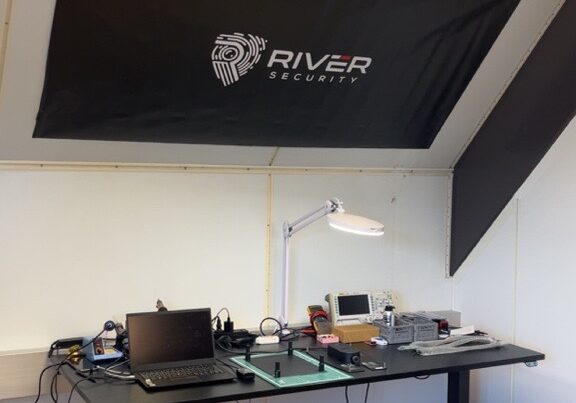
To uncover the kinds of vulnerabilities that matter at the hardware level, specialized tools and a controlled environment are essential. Our dedicated hardware lab enables deep technical analysis using techniques like fault injection, bus monitoring, and chip-level interrogation. This setup allows us to go far beyond surface checks, identifying weaknesses in components such as memory, storage, and internal communication pathways. This means greater assurance that your product has been rigorously tested under real-world attack conditions, before it ever reaches your customers.
At River Security, our dedicated lab is equipped to safely and thoroughly explore the full attack surface of the products we test. With specialized tools and controlled conditions, we can perform in-depth hardware and embedded security analysis while ensuring both the product and our equipment remain protected throughout the process.
Stories from our customers

“River Security did a penetration test and assessment of the cyber security of our product. The team at River did a great job in understanding our systems in no time. They were highly efficient in analyzing every piece of our solution, both on our physical devices and on our cloud systems, and gave continuous feedback to us on things to improve.”

Head of Software

“Rostein is pleased with the work and results, and the delivery and the report contained everything we needed. River Security’s thorough approach and comprehensive analysis met our expectations and helped us understand our security landscape better.”

Head of IT

“As the uncertainty surrounding the situation in Europe continues, security in critical infrastructure is of higher importance than ever. Having an external party look at your company from an attackers’ point of view is crucial to identify weaknesses, but also to confirm good measures already in place.”

Head of IT

“As part of our ongoing security efforts, we’ve engaged external experts, River Security, to assess our security posture. They specialize in offensive security, or “Red Team” activities, and we affectionately refer to them as “kind bandits.”

CEO

“Partnering with River Security has given us real-time visibility and proactive protection for our expanding infrastructure. Their…

IT Director